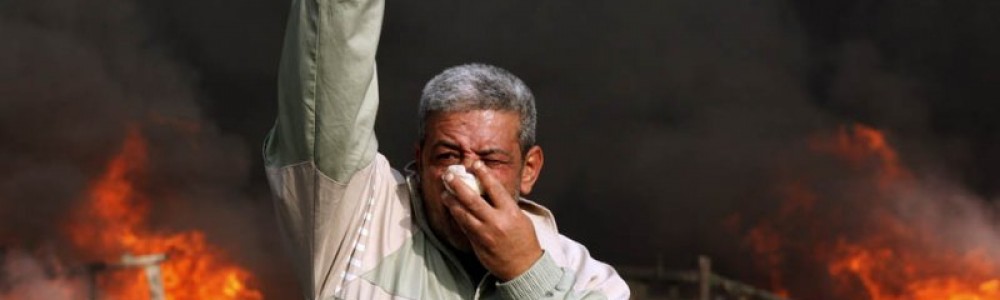
It began with a spark, four years ago: An itinerant fruit seller, despairing of life in authoritarian Tunisia, set himself on fire and burned to death. It provoked a revolution, and the flames caught swiftly across a region that had known little but despotism since the day colonial rulers went home.
The world celebrated the “Arab Spring” as evidence that the people of the Middle East, like those everywhere, yearn to be free. But time has not been kind to the optimists.
After some hiccups, Tunisia is the one bright light today, with a free presidential election planned later this month. But across the Middle East, bloodshed, chaos and dashed dreams were far more often the result.
Hundreds of thousands have died, most in a ferocious and seemingly unwinnable Syrian civil war that has displaced millions, spilled over into Iraq, and threatens to destabilize other neighboring countries. Libya is an ungovernable and dangerous mess. And Islamic radicals have seized the discourse to a great extent; a US-led coalition fights them now, in Syria and Iraq.
“We can expect democratic transitions to be messy, chaotic and sometimes bloody, but this is worse than even the worst expectations,” said Shadi Hamid, a Mideast expert at the Brookings Institution. The biggest and most unfortunate lesson people learned, he said, is that peaceful protest does not necessarily lead to a peaceful way forward or toward democratic transition.
Increasingly, people in the region are asking whether democracy is even a good idea in the Arab world. The question seems unfit for polite society, but it was already on the table in January 2011, as a panel of Arab finance figures considered events back home from the comfort of the World Economic Forum at Davos, Switzerland, its members clearly none too pleased.
One recommended strong but “benevolent” leaders for the region. Another said democracy was alien to a region where patriarchal traditions dominate. A third said the public needs education lest it simply vote along tribal lines. Others saw radical Islamists swiftly bamboozling the masses.
Among the mostly Western audience, there was a palpable sense that these were the well-fed, predictably disinterested in sharing the pie.
Within days, a cheering world community was riveted to screens as Egypt’s long-submissive people thronged to Cairo’s Tahrir Square, braving bullets and refusing to leave until veteran ruler Hosni Mubarak stepped down.
The military forced him out in the end. But in the narrative of revolution, it was articulate young activists like Google executive Wael Ghonim who got the credit. They are not much to be seen these days in Egypt.
Instead of the liberals, an Islamist party won four elections. It badly misruled and was overthrown by the military and banned, its leaders now in jail and being handed death sentences en masse that are not likely to be carried out. Many hundreds have been killed in the suppression of street protests. Military chief Abdel Fattah el-Sissi was elected president almost without challenge, but domestic criticism is muted now and liberal activists sit in jail. Angry jihadis blow things up and kill what soldiers they can catch.
Bringing things nearly full circle, a court last weekend acquitted Mubarak — who has been in detention since stepping down — of corruption and dropped charges of complicity in the deaths of hundreds during the revolt. It went over quietly; the people, most of all, are yearning to be free of turmoil, and to have enough to eat. It seems likely that Mubarak, 86, will soon walk free.
The jihadis who want to export Islam by force through the region and the world were a threat before, but the past four years took it to a new level.
Libya’s conflict sent heavy weapons scattering across the Mideast and war in Syria generated a new jihadi cause. Then came the banning of the Muslim Brotherhood in Egypt — and the support that move received in the Gulf, except for in Qatar. The Brotherhood denies any connection to terrorism but some supporters have likely given up on the ballot box.
So jihadis are at war with secular governments and moderate Muslims everywhere. It is not just the Islamic State group, imposing an extremist form of Islam in parts of Syria and Iraq; it’s also the Nusra Front and other Syrian factions with radical ideologies. Jihadis terrorize much of Libya and in Egypt’s Sinai are in rebellion.
They fight the government and the Americans in Yemen. So brutal are these radicals — massacring opponents, enslaving women, and beheading captives — that they are widely seen as a greater threat than anything as tame as a corrupt and authoritarian military regime.
Copyright 2014 The Associated Press. All rights reserved. This material may not be published, broadcast, rewritten or redistributed.