Seeking to persuade the Bahrainis, as well as other countries in the region,
to adopt a more representative form of government still remains one of
Britain’s main priorities. As a Downing Street spokesman commented after the
Sandhurst-educated monarch’s visit, Mr Cameron remains committed to ongoing
political reform in Bahrain and “encouraged His Majesty to continue to
demonstrate substantive progress in all areas”.
That said, a new sense of realism is discernible in Whitehall’s approach to
the conservative monarchies bordering the Persian Gulf, with officials in
Downing Street and the Foreign Office taking a more measured view of just
how quickly they can be expected to adapt.
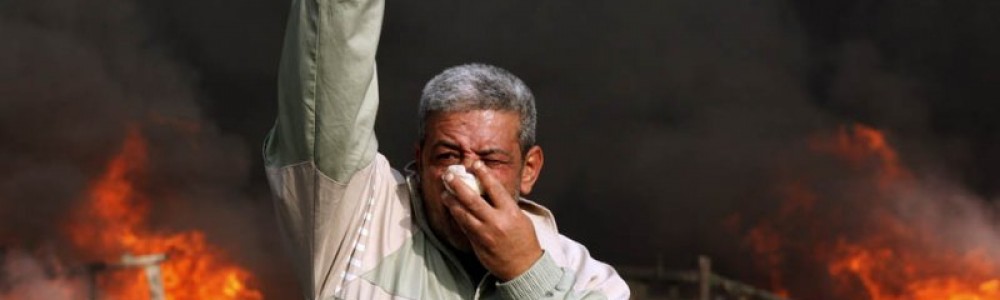
Britain and America’s support for the removal of long-established
dictatorships in Egypt and Libya only served to create a dangerous political
vacuum in North Africa that is being actively exploited by Islamist groups
hostile to the West. And it is the dawning realisation that a similar fate
could befall the kingdoms of the Gulf that has persuaded Britain to adopt a
more nuanced approach. Indeed, according to senior Bahraini officials who
travelled with the royal party this week, one of the main items on the
Downing Street agenda was Bahrain’s desire to sign a billion-pound arms deal
with Britain to supply 12 state-of-the-art Typhoon fighters.
Given the kingdom’s unpopularity, British officials understandably remain coy
about the prospects of such a deal being signed in the near future. The
fact, though, that the subject was even broached is indicative of the quiet
revolution taking place in our attitude to the Gulf states, with those in
favour of cementing closer ties talking enthusiastically about Britain’s
re-establishing its historic strategic position east of Suez.
The government’s decision in 1971 to grant independence to the Arab countries
of the Persian Gulf and withdraw British forces west of the Suez Canal
predated the Iranian revolution and its negative impact on the security of
the region, upon which the West relies for more than 50 percent of its
energy. But since coming to office Mr Cameron has spearheaded the diplomatic
effort to re-engage with our traditional allies in the Gulf. He has taken
business delegations to Saudi Arabia and the United Arab Emirates, and there
is talk of a prime ministerial visit to Bahrain next year, when the kingdom
is preparing to celebrate the bicentenary of its association with Britain.
At the heart of this flurry of activity is the possibility of an arms deal
between the UK and all the Gulf states – including Bahrain – which would
provide a much-needed boost to the British defence industry while
safeguarding the Arab world’s more vulnerable countries.
If a deal can be agreed – and detailed negotiations have been under way for
more than a year – then the six states (Saudi Arabia, Oman, the UAE, Qatar,
Bahrain and Kuwait) would sign a multi-billion-pound contract to buy
Typhoons and military equipment. In return, those countries would like to
see Britain strengthen its military ties, with a permanent garrison of
troops and an RAF combat squadron stationed in the Gulf.
Apart from securing lucrative trade links, the revival of Britain’s influence
east of Suez would reassure those states, such as Bahrain and the UAE, that
are still fighting attempts by Islamist militants to overthrow their
governments. In spite of Bahrain’s recent political reform programme,
dissident groups linked to Iran have been blamed for two car bombs in the
capital, Manama, in recent weeks. And last month 68 Islamists were jailed in
the UAE for plotting to overthrow the government, despite efforts to
introduce a more democratic system.
With so much turmoil throughout the Arab world, it certainly makes sense for
Britain to strengthen ties with historic allies, as well as protecting our
national interests.