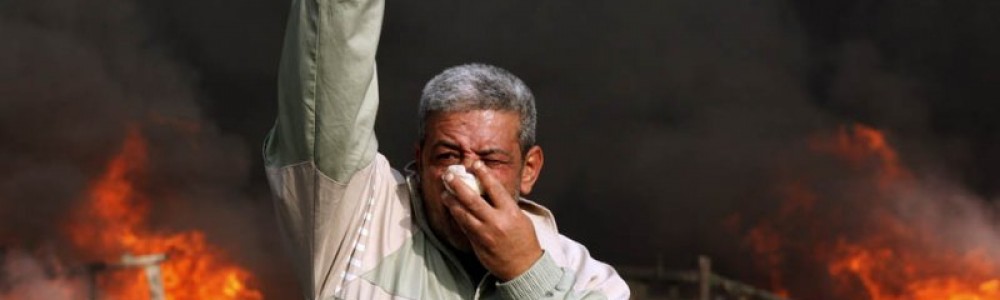
Manama: A Smear campaign aimed at changing people’s way of life in Bahrain is being waged by the international media, according to a local think tank.
Negative coverage of the country has increased markedly over the past four years – especially when compared to the way Iran is portrayed, Bahrain Centre for Strategic, International and Energy Studies (Derasat) executive director Dr Khalid Al Ruwaihi told the GDN.
He stopped short of describing the campaign as a full-blown conspiracy, but said that it was important to promote the truth.
“At Derasat, we monitor whatever is published in the world regarding the Middle East and particularly the Arabian Gulf,” he said.
“The amount of articles, books and interviews published against Bahrain and neighbouring GCC countries compared to what has been written about the situation in Iran is incomparable.
“I don’t want to get into conspiracy theories, but it shows that there is a project aimed at changing the way people live in GCC countries.”
Dr Al Ruwaihi did not go into detail about exactly how people’s way of life was under threat in Bahrain, but he did link his comments to the unrest of 2011 and the opposition’s calls for regime change.
He dismissed claims that anti-government protests should be seen as pro-democracy demonstrations and said that world powers such as the UK were well aware of this fact – as is evidenced by the latter’s commitment to build a new naval base here.
“The new base gives us lots of indicators, the first of which is the critical trust that the British government is putting in Bahrain as a whole, as well as in the Ruling Family and the government,” he said.
“It shows that the British government, one of the most important in Europe, has discovered what happened in Bahrain (in 2011) wasn’t related to democracy at all.
“Although at the beginning people started to talk about enhancing their lifestyles and salaries and so forth, after a few months the people of Bahrain saw what was in front of them – a project to change the country, exactly as happened in Iraq.
“It is not comparable to Egypt or Tunisia, because in those countries they were in a critical economic situation, which was not happening in Bahrain.”
As well as being a show of faith in Bahrain, the new UK base is also an “indicator that the British government wants to play an important role in this part of the world,” said Dr Al Ruwaihi.
“I don’t think it is going to affect the US base because they are not a competition and it will make their collaboration easier,” he said.
“As for the expansion of the US base, it is an answer to all the questions raised by the so-called Arab Spring.
“Most people were saying that the US would withdraw from the Middle East, but here is another answer to stability in our region.
“Their expansion is going to add another element in case any country thinks it can affect the stability of the region.”
UK Foreign Secretary Philip Hammond signed a memorandum of understanding with Bahrain’s government in December last year to set up a new permanent naval base here.
It is expected to accommodate Britain’s new Queen Elizabeth-class aircraft carriers and Type 45 destroyers.
Carrying an estimated cost of £15 million (BD8.6m), the new base – called ‘HMS Juffair’ – will act as an upgrade of the existing facilities at Mina Salman used by the four British minehunters currently working in the Gulf.
It will also reportedly enable British sailors to be based permanently in Bahrain along with their families and is expected to be operational by next year.
Meanwhile, the US Navy base in Juffair continues to expand with the GDN reporting in June that it now accommodates around 8,300 personnel – up from 6,500 two years ago.
laala@gdn.com.bh