He also added that all opposition groups are united to develop a democratic system in the Persian Gulf state.
In the background of this Bahraini opposition parties have called for mass protests every day in the run up to the date of the second anniversary of the peoples’ rebellion in Bahrain against a despotic monarch. Four of the daily rallies have already taken place attracted large crowds with regime forces present. The Bahraini authorities have offered dialogue in the lead up to this anniversary, but conditions of dialogue are to be without the presence or involvement of the king or prime minister of the country leading observers to think that dialogue under these conditions would not be serious or legitimate.
Press TV has interviewed Dominic Kavakeb, political strategist with the Bahrain Justice and Development Movement about this issue. The following is an approximate transcription of the interview.
Press TV: The Bahraini opposition held a conference in London. Are they credible people in your opinion?
Kavakeb: I think anyone is credible who is fighting against dictatorship and anyone calling for democracy is obviously credible.
The thing you have to take with Bahrain is, of course like any struggle for liberation, is there are always different strands of political ideology: there are those who call for a Constitutional Monarchy; there are those who call for the downfall of the monarchy. That’s natural and that’s normal, but there is also a surprising level of unity amongst all groups.
Press TV: They are not divided like the Syrian opposition?
Kavakeb: Exactly. If you look at other countries that have risen up in the Arab Spring there is a lot of disunity between different group. I think in Bahrain, such a small country, but there is still a good deal of unity between the opposition groups who have different ideas and are calling for different things, but they still do manage to stay together fairly well.
Press TV: Pro-regime people in Bahrain would probably say, you know, these people are in London they’re in Beirut for example, they’re out of touch, they’re not relevant it’s all hot air…
Kavakeb: I think the first thing to say is I don’t any of those people would actually want to be outside of Bahrain. If you speak to any activist outside of the country, they don’t choose to be outside of Bahrain; they are there because they can’t openly be active inside the country because they would be threatened with arrest and with torture, all the terrible things we’ve seen happen to opposition people inside the country.
Even so, just because they are outside it doesn’t suddenly discredit them. I think in this day and age we’re living in with people constantly messaging in each other about what’s happening, a constant exchange of ideas – they can stay in touch very easily with what is happening on the ground.
Press TV: Do you think the government the regime in Bahrain cares what they say – do you think they’re bothered by this conference for example?
Kavakeb: I think definitely that the Bahraini government really cares what opposition people are doing outside of the country because they wouldn’t be spending so much money on PR (public relations) to try and combat that if they didn’t care.
I think the Bahrain regime cares a lot about its image and clearly puts efforts into making sure that image is PR-friendly, the image of a modern state that can work with the West and so on and so forth. So they feel that those people outside the country are undermining that effort.
Press TV: I want to talk about something that is in the news now about the national dialogue, which is taking place between the opposition and the government. Do you see that as a serious national reconciliation attempt?
Kavakeb: It’s hard to say at the moment. I think the first thing to say is it’s great to hear that there is something happening.
When you’ve been going since the failure of the last national consensus dialogue in July 2011 – since that failure there has been nothing, no talk of reconciliation, no talk of dialogue and we do feel that the best way out of this crisis is through a peaceful dialogue.
Whether this is a serious attempt by the government to move the country towards democracy is a different thing altogether. We’ve been hearing over the last couple of weeks, since the announcement came out, that perhaps the government won’t be directly involved that they will act as a mediator between the communities in Bahrain…
Press TV: Is it a serious dialogue with out the king, the crown prince and the prime minister?
Kavakeb: I don’t think it is. I think the government in Bahrain is part of the problem therefore they have to be part of the solution. It’s as simple as that.
This idea that they can stand above everything, that they can let people sort their differences out and then say we’ll implement some of the things or we won’t implement some of the things – it’s an elitist attitude; it’s the reasons why we’re here where we are today.
The people want an elected government, they want a government that represents the will of the people so therefore the government has to be directly engaged in talks.
Press TV: The opposition demands are quite well known: the release of political prisoners, an elected government, an elected parliament, etc.
But it takes two to tango – What onus is there on the opposition to compromise? What do they have to do to move this process forward?
Kavakeb: I think in any negotiation in any dialogue of that nature there is always going to room for compromise.
But at the same time, you know, we’re talking about two years in which we’ve seen over 100 people lose their lives; we’ve seen thousand of people sacked from their jobs; we’ve seen people lose their whole livelihoods, their families – we’ve people lose so much that actually the onus really is on the government to try and bring confidence back to the people; to try and rebuild the trust in the country.
Because it’s not the opposition that has been violating the people in the country, it’s the government so the onus should be on them to try to find the solution.
In terms of the opposition, one of things they have done is lay out clearly their set of demands and actually a vision for the future; they’re not just kind of in the air saying we oppose dictatorship. They know what they want, they’ve outlined it in the Manama Document, which was issued in October 2011.
This document says we need an independent judiciary and it talks about how to do this – these are essential questions to moving Bahrain forward.
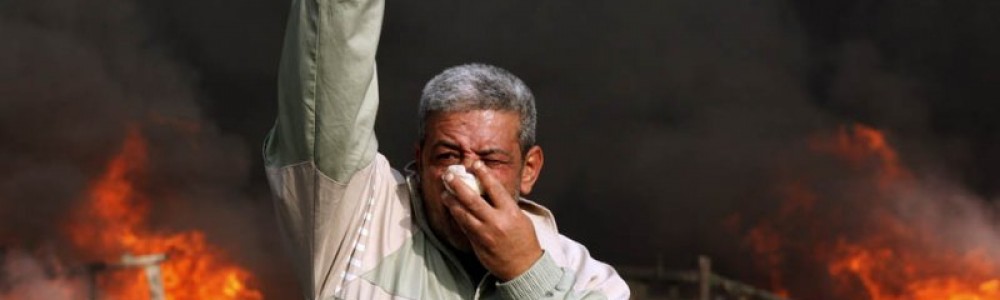
Press TV: We see these pictures all the time and videos of protesters burning tyres and blocking roads, causing disruption – Is that a legitimate form of protest?
I don’t think so. I don’t think it’s what’s going to bring about democratic change in the country. And that’s the key thing here. But at the same time you have to have some kind of perspective a few crudely made homemade Molotov cocktails are not the same as the large weapons we’re seeing in countries like Syria. It’s a completely different case altogether and we should keep that perspective.
Kavakeb: Not long ago Bahrain sentenced one of its police officers to jail time for shooting dead a protester. Seven years for killing a protester – is that fair enough?
Press TV: Well, it’s something and it’s better than nothing, but I think the two key issues here are firstly. the people who allowed this torture to happen at the top of the government are not being held accountable – and that’s the first step, we can’t just be pushing this on lower level police officers.
But also we have to ask the question – you have opposition leaders who are in life sentences for peacefully protesting, which is a far worse case that this police officer who killed people. So you know, there clearly is a problem in the judiciary in Bahrain.
Press TV: The US fifth fleet, is it’s presence in the region legitimate in yoru opinion?
Kavakeb: I think that’s always up to the people there to decide, it’s not something anyone outside of that situation can really say.
Press TV: What do the Bahraini people think about it do you think?
Kavakeb: I think there’s probably mixed reactions, mixed views, I think you’d have to ask them yourself, but one of the impressions I get from the Bahraini people is that, whatever these outside investment deals or whatever they are, they want it to be something that will benefit the country and benefit the people.
If these things are going to be there it has to be to the benefit of the people and if it’s not benefiting the people, if it’s being used as a justification or an excuse to crackdown then that’s not a good thing.
Press TV: But do you think the US fifth fleet effectively guarantees the al-Khalifa’s security? Is it propping them up?
Kavakeb:I think there’s probably more to it than that, I think it’s part of it, I mean, look, it’s clear that all Western governments states not just the US, but the UK and others have a vested interest in the Gulf region and in Bahrain at the moment – that’s fundamentally clear. But what we’re calling for is to say OK you may have these interests, but your foreign policy should be ethical-based, not just interest-based.
This is what William Hague said. When William Hague first became foreign secretary he specially said we have interests, but at the same time our interest is to see democracy, is to see human rights, is to see respect for these things.
So either he was lying when he said that or the UK policy is failing because they’re not following these things that they said they would do.
Press TV: I notice the Bahraini opposition don’t talk a lot about the US fifth fleet. First of all, why don’t they do that?
And secondly, pro-regime people would say that if the opposition took over then the US fifth fleet would be threatened. Is there any truth in that?
Kavakeb: Well they haven’t said that. I haven’t seen the main opposition in society say that the fifth fleet is under threat at all.
It’s the normal game that pro-government people like to play, you know, to tell the West that your interests will be completely lost if there’s democracy in Bahrain. That’s just not fair and it’s just not right. Interests aside, that should not be a justification to not allow democracy in a country.
The people are the people of that country and they should be able to decide what happens in terms of investments, in terms of foreign – anything it might be, military etc and of course for their own democratic country.
Press TV: The second anniversary of the February 14th revolution is coming up. What are you expecting?
Kavakeb: We’ve seen so far the opposition announce that there is going to be 16 days of protests, which is a protest every single day leading up until the 15th, 16th of February and so far we’ve seen really solid turnouts on all of those demonstrations – the first 4 or 5 so far have been huge with thousands of people coming out into the streets.
Of course, this is coinciding with what we discussed earlier, which is the dialogue. And it is interesting to note that the government have kind of called for this dialogue to take place four days before the revolution’s anniversary, which is possibly a little bit suspect as a way to try and quell any protests that take place over that time.
But I think we’re going to continued protests without a shadow of a doubt.
Press TV: Are we going to see violence?
Kavakeb: No I don’t think we’re going to see violence. The main slogan on the protest yesterday was ”No U-turn” and people were holding banners with the no u-turn sign.
I think that’s the key to say OK even if there’s a dialogue taking place that doesn’t mean to say the protests should stop, it doesn’t mean to say everyone should go back home; people won’t return back home until there is democracy; until there is respect for human rights; until there’s real reform in the country.
Press TV: We did earlier on from the Bahraini exiles – the opposition leaders that the younger people the youth are actually more radical than the elders. Do you see that as a trend and perhaps a dangerous trend?
Kavakeb: It’s often the case anywhere. You know, younger people tend to be more radical than the older generation who might be a bit more cynical, a bit more conservative over time.
But I think there’s space for everyone in Bahraini society. There’s a space for all view points, there’s a space for all discussions to take place. What we need is for that discussion arena to be allowed; to stop the crackdown on freedom of expression where people feel stifled. Let people have their say, let people talk. If they oppose the regime and want it to come down, et them discuss that and debate it and if they want a constitutional monarchy, equally, let them debate that.
SC/JR