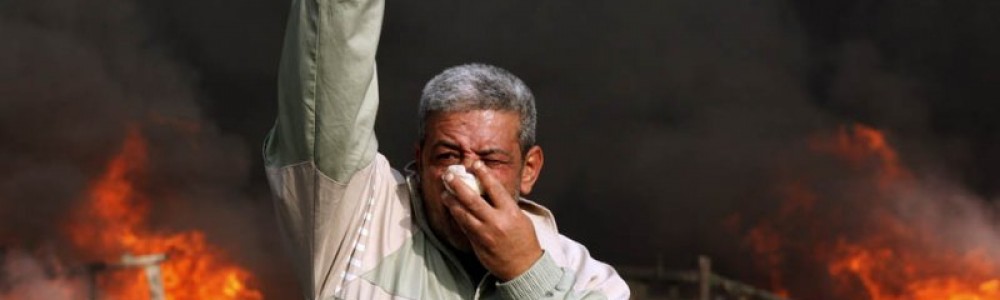
* Discussions aimed at ending political standoff and unrest
* Bahrain is strategically placed U.S. ally
* First reconciliation talks since July 2011
(Adds first session of talks concluded, quotes)
By Angus McDowall
MANAMA, Feb 10 (Reuters) – Bahrain’s government and
opposition held reconciliation talks on Sunday for the first
time since July 2011 to try to end two years of political
deadlock in the strategically vital Gulf Arab island kingdom.
Home to the U.S. Fifth Fleet, the tiny state has been hit by
unrest since mass pro-democracy protests in early 2011, becoming
a front line in a region-wide tussle for influence between
Shi’ite Muslim Iran and Sunni Arab states such as Saudi Arabia.
The mass disturbances were crushed but demonstrators drawn
mainly from Bahrain’s Shi’ite majority have continued small
protests on an almost daily basis demanding the Sunni ruling
family call elections and create a constitutional monarchy.
While opposition members have expressed very cautious
optimism that the talks represent a meaningful step forward,
they have also voiced concerns that the agenda remains unclear.
Before Sunday’s gathering, which broke up after more than
three hours, Khalil Ibrahim, a senior official of the main
opposition Wefaq movement, said Wefaq would decide on Monday
whether to continue with the dialogue.
Wefaq has commanded nearly half the electorate in past
parliamentary votes but the government has refused to budge on
opposition demands to give the elected chamber of parliament the
power to form cabinets.
Opposition negotiator Abdulnabi Salman, from the Democratic
Progressive Tribune group, told reporters after the session: “So
far so good, and we will continue for the next session, but
there is no guarantee that we will continue forever.”
He said the gathering had not yet set an agenda and
opposition groups would discuss the way forward on Monday.
Asked if he thought government negotiators had showed they
were serious, Salman said: “Not yet. For me they didn’t show us
that… But they showed us that they can listen to us, which is
a positive step.”
Justice Minister Sheikh Khaled bin Ali al-Khalifa told
journalists that the session had been a positive start and it
“confirmed the importance of this dialogue”.
The opposition walked away from reconciliation talks in July
2011, saying they were not carried out fairly.
AGENDA
“We hope we can reach in the first sessions a good agenda
that will be acceptable to all,” said Samira Rajab, Bahrain’s
information minister, before the session.
Of the 24 other participants, eight will be from the
opposition, eight from pro-government parties and eight from
Bahrain’s national assembly, made up of the appointed Shura
Council and an elected chamber.
“The issue in this country is between the government and the
opposition. They are the real stakeholders. But there are lots
of others who will sit around the table,” said Jasim Husain, a
former Wefaq member of parliament.
During the 2011 talks, opposition members complained that
Wefaq was given only one out of 60 seats in the dialogue, the
same number as very small pro-government parties.
SPLITS
The government has accused the opposition of acting on
behalf of Tehran, which has denied the accusation.
Opposition and human rights activists fault the government
for what they describe as severe sentences for protesters and
the violent tactics used to suppress demonstrations.
About 35 people died during the 2011 unrest and in the two
months of martial law afterwards, according to an independent
commission of inquiry, but the opposition says at least 80 died.
The government points to its record in implementing some
reforms to the police and judiciary, increasing powers for the
elected parliament and appointing an independent inquiry that
criticised the country’s response to unrest.
But opposition figures have said these are cosmetic, since
they do not curtail the ruling family’s grip on ultimate power.
The opposition has said its main conditions for continuing
the talks are that ruling family members attend, that the talks
bring about decisions rather than recommendations, and that the
result is put to a public referendum.
(Reporting By Angus McDowall, Editing by William Maclean and
Richard Meares)