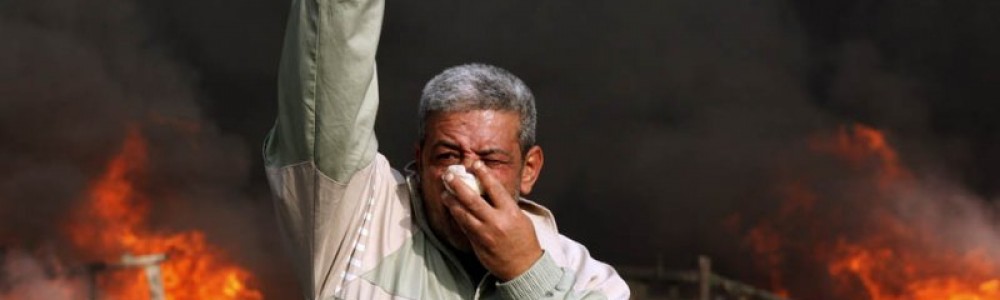

Tension has increased again in the Persian Gulf island kingdom of Bahrain, the home of the U.S. Fifth Fleet, after one policeman was killed and a second seriously injured by a homemade bomb during a clash with Shiite demonstrators in a village outside the capital, Manama.
These latest casualties in Bahrain, in the troubles that started in early 2011, occurred just three days after the Bahraini Foreign Ministry had summoned Iran’s top diplomat on the island to complain about Tehran’s interference in Bahrain’s internal affairs. Specifically, and without mentioning by name Bahrain’s majority Shiite community, the Bahrainis accused Iran of inciting sedition and sectarianism “via its mass media; and through ties and contacts with specific groups in the Bahraini community.” Tehran was also accused of falsely claiming that Bahrain had requested Iranian mediation to help resolve the island’s problems.
 Fatalities in Bahrain’s security forces are comparatively rare despite nightly clashes. Both the government and the opposition regularly release horrific video clips of the exchanges, in which the rioters use rocks and gasoline bombs against armored vehicles belonging to the police. Civilian casualties, including young children and old people who have been overwhelmed by widespread use of tear gas, include more than sixty killed since last year. Although the death toll is small compared with that in Syria, the events in Bahrain have considerable regional significance because of ancient tensions between Sunni and Shiite communities, overlaid with a perception of Iranian malevolence toward the Arab monarchies of the Persian Gulf.
“Washington’s dilemma is how to reduce tensions in Bahrain and advance a political rapprochement….” – Simon Henderson, The Washington Institute
The troubles in Bahrain are of particular concern to neighboring Saudi Arabia, whose own Shiite community is the local majority in the oil-rich Eastern Province, just a dozen miles from Bahrain, and the other end of a causeway joining the two countries. On the same day as Bahrain protested to Iran, the Saudi interior minister, Prince Ahmed bin Abdulaziz, who is emerging as a key member of the otherwise aging Saudi leadership, met the Iranian ambassador to Riyadh and probably emphasized Saudi concerns similar to those of the Bahrainis. Saudi Shiites conduct regular protests against what they regard as official discrimination, and armed clashes have occurred on occasion.

An Iranian woman shouts anti-US slogans as she holds portraits of Iran’s Supreme Leader Ayatollah Ali Khamenei and a Bahraini flag during a demonstration in Tehran September 9, 2011 (Reuters).
Washington’s dilemma is how to reduce tensions in Bahrain and advance a political rapprochement, while also maintaining the Fifth Fleet headquarters, a crucial part of the U.S. commitment to ensuring the security of energy exports from the Gulf as well as pressuring Iran on its nuclear program. Moderate Shiites, who withdrew from Bahrain’s parliament in protest against a government crackdown last year, generally support the U.S. presence but risk being outflanked by more extreme Shiites who want the base to be closed. Meanwhile, hardline Sunni lawmakers last week criticized U.S. ambassador Thomas Krajeski for “interference…in the country’s domestic affairs” and accused him of “frequent meetings with [Shiite] provocateurs.” The report was the main story in last Friday’s Gulf Daily News, under the headline “U.S. Envoy Warned,” a prominence that suggests government endorsement.
Despite an official commission intended to help heal the political wounds of the initial 2011 crisis, an early settlement of Bahrain’s problems seems unlikely. Both the government and the opposition are split into moderates and hardliners, with each side conducting elaborate public relations campaigns to depict itself as being reasonable and foist blame for the deadlock on the other.
The risk is that an incident at home or elsewhere in the region will escalate the tensions to a new level, further marginalizing the moderates. The United States should continue working with other countries, including Bahrain’s Gulf Arab neighbors and Britain, the former colonial power, to emphasize the need for the government to make concessions and for the opposition to temper its demands. Additionally, blunting Iran’s capacity for mischief and clear progress in frustrating Tehran’s suspected nuclear ambitions would help clarify the U.S. position and resolve.
This post was originally published on WashingtonInstitute.org. ©2012 The Washington Institute for Near East Policy. Reprinted with permission.
The views expressed in this Insight are the author’s own and are not endorsed by Middle East Voices or Voice of America. If you’d like to share your opinion on this post, you may use our democratic commenting system below. If you are a Middle East expert or analyst associated with an established academic institution, think tank or non-governmental organization, we invite you to contribute your perspectives on events and issues about or relevant to the region. Please email us through our Contact page with a short proposal for an Insight post or send us a link to an existing post already published on your institutional blog.

Simon Henderson
Simon Henderson is Baker fellow at The Washington Institute and director of the Institute’s Gulf and Energy Policy Program.
Open all references in tabs: [1 – 5]